
Key Takeaways
- Standard casters are cost-effective and excel in high-load, smooth-floor applications.
- Spring-loaded casters provide shock absorption for sensitive equipment on rough surfaces.
- Assess your load sensitivity, surface conditions, and budget to select the right caster type.
- Noise reduction and operational efficiency can be significantly improved with the correct caster choice.
Understanding Standard Casters
Standard casters, often referred to as rigid casters, are fundamental components in many mobility and transportation solutions. They feature a simple, rugged construction without built-in suspension systems, making them a reliable choice for facilities that need straightforward, durable mobility solutions.
Their design allows them to maintain stable and direct contact with the floor, resulting in precise maneuverability that benefits many industrial, commercial, and institutional applications.
As a cost-effective mobility solution, standard casters are commonly selected for scenarios where loads are heavy, and the need for additional cushioning or shock absorption is minimal. Due to their fewer moving parts, these casters require less maintenance, making them appealing for environments where downtime is costly.
For applications needing improved ride quality or impact resistance, shock absorbing suspension casters provide an upgraded alternative. Their simplicity and durability make them a staple in numerous material-handling setups where reliability is paramount. As industries continue to evolve, standard casters remain a trusted, dependable choice for everyday mobility needs.
Exploring Spring-Loaded Casters
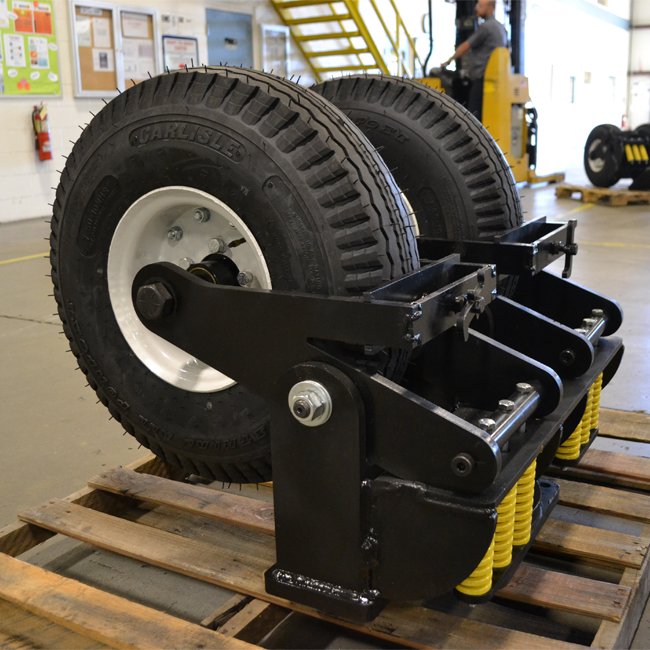
Spring-loaded casters are engineered specifically to reduce shocks and absorb vibrations that can occur while moving loads across uneven or rough surfaces. Incorporating a spring mechanism allows the wheel to absorb impacts, thereby safeguarding sensitive equipment or delicate materials from jarring movements or sudden jolts.
The integrated springs also help to distribute weight more evenly, adapting to sudden shifts in load distribution and minimizing the risks associated with instability or tipping.
Unlike rigid casters that rely solely on wheel design for comfort and stability, spring-loaded designs add an essential buffer between the rolling equipment and the ground. This cushioning not only protects transported goods but also benefits operators by reducing the transmission of vibrations and noise.
The added flexibility allows these casters to maintain consistent floor contact, making them ideal for settings where both equipment integrity and floor protection are priorities.
Key Differences Between Standard and Spring-Loaded Casters
- Shock Absorption: Spring-loaded casters offer superior shock and vibration absorption, making them ideal for sensitive or fragile loads. By contrast, standard casters can transmit every bump or uneven seam directly to the cargo, increasing the risk of wear, impact damage, or product instability.
- Noise Reduction: The presence of shock-absorbing springs in these casters can drastically reduce noise during transport, improving working conditions and reducing noise pollution in busy facilities. Standard casters are typically louder, especially on coarse or jointed surfaces.
- Load Capacity: Due to their simple, rigid structure, standard casters generally support greater loads compared to spring-loaded varieties. In contrast, the built-in spring mechanism adds some load-bearing constraints to spring-loaded casters.
- Maintenance and Durability: Standard casters outlast spring-loaded options in maintenance-light applications, as their design has fewer parts prone to wear. Spring-loaded casters include additional moving components that may require scheduled inspections or occasional replacements.
When to Choose Standard Casters?
Standard casters are most suitable for:
- Transporting goods or equipment that is insensitive to vibration and impact.
- Facilities with smooth, even flooring that require minimal shock absorption.
- Projects where maximum load capacity is essential, and spring mechanics are unnecessary.
- Environments prioritizing low maintenance and overall cost-effectiveness.
When to Opt for Spring-Loaded Casters?
Spring-loaded casters are ideal for scenarios that involve:
- Delicate or valuable equipment that could be compromised by vibration or rough handling.
- Transport over rough, cracked, or irregular flooring where shock absorption is essential.
- Efforts to minimize operational noise and enhance workplace comfort.
- Environments require additional protection for both the load and the underlying floor surfaces.
Considerations for Selection
Selecting between standard and spring-loaded casters depends on a detailed assessment of specific project requirements. Consider the sensitivity of your loads to shocks and vibrations, taking into account how easily your cargo could be damaged during movement. Evaluate the characteristics of the surfaces your casters will traverse—harsh, unpredictable floors call for spring-loaded designs.
Factor in acceptable noise levels, especially if you are operating in environments that are sensitive to loud distractions or require compliance with noise regulations. Finally, weigh your available budget and consider whether long-term maintenance savings offset a higher initial investment.
Final Thoughts
The decision between standard and spring-loaded casters hinges on how you prioritize simplicity, performance, and protection. Standard casters are ideal for high-weight, evenly distributed loads on smooth flooring, providing a durable and economical solution.
When load safety, operator comfort, and reduced noise are paramount—especially across challenging or unpredictable surfaces—spring-loaded casters become the preferred option. Identifying the specific needs of your operation ensures not only smoother mobility but also extends the longevity of both your equipment and floors.
