
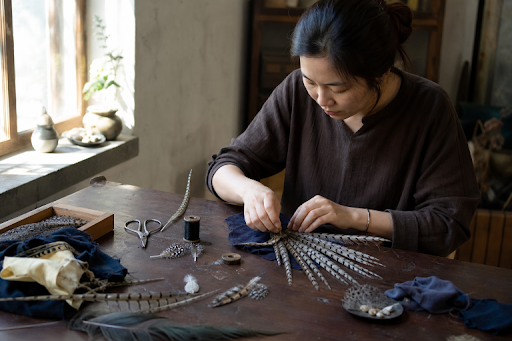
Feathers bring a quality that many other decorative materials cannot easily match: they combine line, softness, texture, and movement into a single small element. Whether you are styling a hat, assembling a costume, framing a nature-inspired arrangement, or making an accessory, thoughtfully selected silver pheasant feathers can add height and visual detail without overwhelming the entire piece.
Feather-inspired design remains relevant because it connects natural form with creative expression. The Cleveland Museum of Natural History’s Fashion & Feather exhibition, running from April 22 through October 11, 2026, explores how feathers have influenced fashion, cultural objects, and contemporary design.
Why Do Feathers Work in Modern Design?
A feather can act as a finishing touch or become the central visual feature of a design. A slim, upright feather can make a modest hat look taller. A soft cluster can make a costume collar feel fuller. A few carefully spaced feathers can also introduce contrast to smooth materials such as satin, paper, painted wood, leather, or metal.
Strong feather work starts with restraint. Instead of covering every available surface, choose one area that needs emphasis, such as a neckline, a hair clip, a frame corner, or the upper edge of a table arrangement. This approach lets the material retain its distinctive shape and makes the rest of the design feel intentional.
Using Texture and Movement
Texture affects how a finished piece feels before anyone even touches it. Broad feathers can create a bold silhouette, narrow feathers can add linear detail, and fluffy varieties can soften hard edges. Smooth feathers tend to read as sleek and polished, while more open or downy textures create a relaxed, airy effect.
Light also changes the appearance of the material. Natural patterning may appear more pronounced in indirect daylight, while directional indoor lighting can highlight the shaft and edges. Before permanently attaching feathers, place them in the location where the finished item will be displayed or worn.
When a project is still in progress, test the layout from several angles rather than judging it only from above. A feather that looks balanced on a worktable may shift direction once it is attached to a curved hat, flexible fabric, or upright display.
How to Choose Feathers for a Project
The best choice depends on scale, use, and attachment method. A delicate feather suited to a framed arrangement may not withstand the handling required for a brooch or stage costume. Use this simple selection process before beginning:
- Define the purpose. Decide whether the finished piece will be worn, displayed, photographed, or handled frequently.
- Match the scale. Use longer feathers for height and drama, and smaller feathers for detailed accents.
- Inspect the condition. Look for clean surfaces, firm shafts, intact edges, and minimal breakage.
- Consider texture. Choose soft materials for gentle movement and fuller materials when the design needs volume.
- Plan attachment early. Confirm that the base can support sewing, wiring, gluing, or a removable tuck-in arrangement.
Preparing Materials Before Use
Natural materials benefit from gentle handling. Inspect each feather under bright, indirect light and hold it by the shaft whenever possible. A soft brush can remove loose dust, while gentle airflow may help clear light debris. Avoid rubbing the barbs, which can disturb their alignment.
Before using adhesive, color, moisture, or heat, test the method on a spare piece. Keep fine scissors, thread, floral wire, and an adhesive appropriate to the base material nearby. Avoid soaking feathers, pressing them with high heat, or applying strong household cleaners, since those methods can alter their shape or texture.
Project Ideas for Beginners and Skilled Makers
Simple Projects
- Create greeting cards with one or two feathers placed beside a handwritten message or paper cutout.
- Arrange feathers by length, tone, or pattern inside a shallow frame.
- Add a lightweight feather accent to a hair clip, brooch, or costume pin.
- Use a small grouping as a soft accent in a seasonal table display.
Advanced Projects
- Build structured headpieces with wire support and layered placement.
- Create costume panels that move as the wearer walks.
- Combine fabric, paper, wood, embroidery, and feathers in mixed-media wall art.
- Use repeated feather shapes to form a border, fan, or radiating focal point.
Color and Composition Tips
A limited palette often gives feather work a more cohesive appearance. Start with one dominant color, then add one or two supporting shades through fabric, ribbon, paint, or backing materials. Repetition can provide order, but slight differences in angle and spacing keep the result from looking stiff.
Consider direction as carefully as color. Feathers angled toward a central point can guide the eye inward, while feathers placed in a gradual sweep can create motion. Photograph the arrangement before attaching anything permanently. A quick image often reveals uneven spacing, an overly crowded section, or a missing focal point.
Storage and Care Tips
Prevention is easier than repair. Store unused feathers and finished pieces in a clean, dry location away from direct sunlight, cooking smoke, strong odors, and damp conditions. Roomy boxes help prevent crushed edges, while long feathers should be supported so the shafts do not bend.
Check stored materials periodically for dust, moisture, or signs of insect activity. For wearable pieces, remove them carefully after use and avoid packing them tightly under heavier accessories. Thoughtful storage helps preserve color, shape, and texture for future projects.
Making Responsible Material Choices
Knowing where materials come from matters. In the United States, the possession of feathers from many native migratory birds is regulated, and the rules can apply even to feathers found outdoors.
The U.S. Fish and Wildlife Service explains that possession of feathers and other parts of native North American birds without a permit is generally prohibited under the Migratory Bird Treaty Act.
Ask suppliers about species, treatment, and sourcing when those details are unclear. Consider legally sourced domesticated-bird materials, recycled materials, or faux alternatives when they fit the project. It is also important to respect cultural traditions and avoid copying ceremonial or community-specific designs without understanding their context.
Common Questions About Decorative Feathers
Can feathers be used in everyday wear?
Yes. Small accents can work well on hats, jackets, hair pieces, and accessories. Keep the attachment light and secure, and place it where it is less likely to experience repeated friction.
Should feathers be glued or sewn?
The answer depends on the base and the expected amount of movement. Sewing or wiring can suit fabric and flexible pieces, while adhesive may work for flat paper, wood, or display surfaces.
How can damage be prevented?
Handle feathers by the shaft, limit direct sun exposure, avoid moisture, and store them with enough room to retain their natural shape.
Final Thoughts
Feathers can add texture, motion, and visual identity to fashion, crafts, and decor. Choose them with a clear purpose, prepare them gently, and let balance guide the arrangement. With careful storage and responsible sourcing, feather-based projects can remain expressive, polished, and considerate of the materials involved.
