
Today, 1 in every 10 active savings accounts in Bangladesh now sits on a single mobile app, bKash.
5 years ago, this sentence would have sounded improbable. But today, more than 6 million savings accounts have been opened through bKash, enough that 1 in every 10 active savings accounts in the country, across every bank and every platform, now runs through this one digital channel.
The timing makes that number even more striking. According to Bangladesh Bureau of Statistics (BBS), GDP growth slowed to 2.22% year-on-year in the third quarter of FY2025-26, down from 4.53% during the same period a year earlier. Slower growth usually means tighter household budgets, greater uncertainty, and less room to save. Yet over the same period, savings through bKash grew by around 22%, while deposit growth across the banking sector was around 10%.
This is perhaps the more interesting story here. Not why it grew at more than twice the pace of the system it operates within, but why it continued attracting savers at more than twice the pace of the broader banking system when the economy itself was slowing down.
As Selim R.F. Hussain, former Managing Director and CEO of BRAC Bank PLC, has put it, “For any country’s economy, savings is one of the fundamental foundations. The more savings there are, the more banks can channel them into investments. Investment should not only come from abroad; local investments should also come from our own savings.”
By that measure, Bangladesh has underperformed for a long time. Its savings-to-GDP ratio has consistently lagged the levels usually associated with durable middle-income growth. The contrast becomes clearer in comparison with other Asian economies. Singapore has sustained one of the world’s highest domestic savings rates at around 50-60% of GDP for much of the past decade, while India has generally remained above 30%. Bangladesh, by contrast, has hovered around 20% in recent years, limiting the pool of domestic capital available for investment. And for decades, the honest explanation had little to do with financial literacy or household willingness. If the explanation can be reduced to one reason, it is this: who the system was built to serve.
A System Open to Everyone, Reaching Only Some
Formal savings were never legally out of reach. But they worked best for someone who could commit a fixed amount every month, navigate paperwork with ease, and spare time during banking hours. Now hold the other half of the country in view: someone with little to no exposure to formal banking, intimidated by the air conditioning, the lifts, and the quiet sense of not belonging, who also cannot spare a working day during the only hours the branch is open without taking a real cut to that week’s earnings. That person was never refusing to save. They were doing the math correctly, and the math said not to.
This is where financial inclusion conversations often get the story backward. The instinct has been to treat exclusion as a literacy problem: explain banking better, and adoption will follow. But nobody in that mattress-and-tin-box economy misunderstood the idea of saving. They understood the cost of participating. The barrier was never comprehension. It was convenience, time, paperwork, and income they could not afford to give up.
Redesigning Access
In 2021, that calculation finally changed. Partnering first with IDLC Finance and later with 5 more financial institutions, bKash launched Bangladesh’s first digital Deposit Pension Scheme (DPS). Instead of asking customers to visit multiple institutions, compare rates, and navigate different application processes, the platform brought multiple banks into a single interface. What might have taken around 150 minutes across five institutions could now be completed in roughly 1.5 minutes! Customers could compare profit rates, choose between conventional and Islamic savings options, and select monthly plans ranging from BDT 500 to BDT 20,000, with tenures from six months to four years, all without leaving the app. The monthly scheme was later complemented by weekly options starting from BDT 250 to BDT 5,000. It was built for people who do not budget in months because they are not paid in months: day laborers, market vendors, farmers, drivers; the cash-in-hand economy the traditional product had always struggled to reach. Moreover, features such as automatic monthly deductions, early encashment, and the flexibility to cancel at any time reduced the day-to-day friction of saving. Together, these choices made the same savings product practical across different incomes, financial preferences, and income patterns.
The innovation was not the savings product itself. Bangladesh had long offered DPS. The innovation was removing the friction of reaching it.
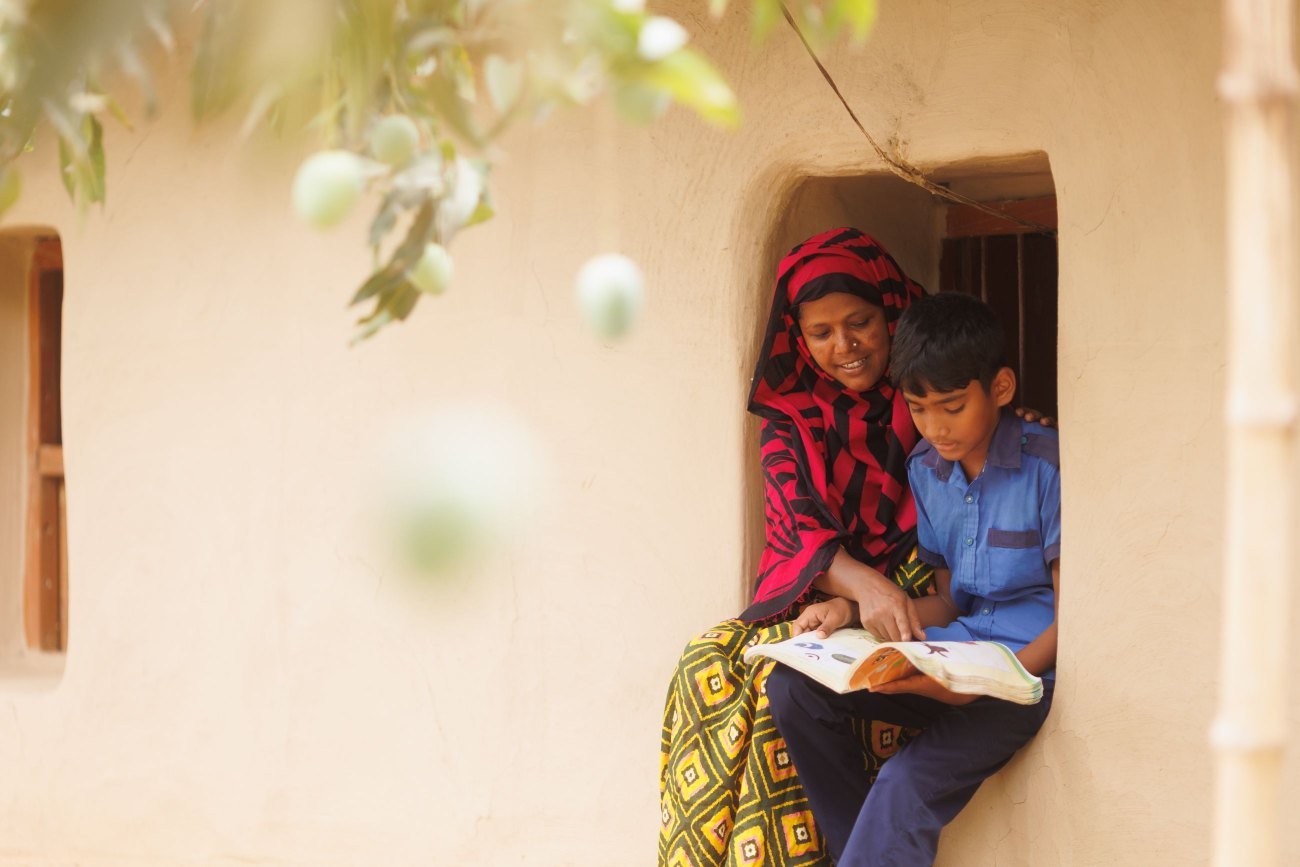
What followed would have seemed improbable only a few years earlier. People who had spent their lives outside the formal financial system began using one of the country’s most digital financial tools. Around 30% of DPS accounts opened through bKash belong to women, and roughly 80% of customers live outside major cities like Dhaka and Chattogram. Not because they suddenly became financially literate, but because using bKash demanded neither financial vocabulary nor paperwork, only the willingness to save and an amount they could afford to set aside. As bKash Founder and CEO Kamal Quadir has often described it, the platform became a “collective mattress” for the country’s unbanked people’s economy.
More importantly, most of these 6 million accounts belonged to people excluded from the formal economy at the outset. Today, those accounts span all 64 districts of Bangladesh and cut across genders, professions, and income groups, extending formal savings well beyond the country’s traditional banking footprint. That exclusion now sits inside the formal financial system. Once mobilized, they do not remain idle. They become lendable capital that finances businesses, infrastructure, and productive investment. Those investments create employment and income, generating new savings that flow back into the financial system. What begins as an individual act of saving ultimately reinforces the country’s own cycle of investment and growth.
However, removing a barrier rarely benefits only the people it was built for.
The Ripple Effects of Better Access
The earliest users were those excluded from formal banking. It did not take long, however, for existing bank customers to follow. Not because they lacked alternatives, but because a process that once required forms, branch visits, and waiting could now be completed in minutes. About 55% of all DPS accounts have been opened outside regular banking hours, suggesting convenience, once introduced, rarely asks for a reason to become the new default.
The shift is visible across generations too. Traditional bank savers have typically entered the financial system later in life, after settling into salaried work. bKash’s savings base skews younger, and the reason seems less about technology than about framing. As Kamal Quadir puts it, “Prosperity begins with savings. The day a person saves their first taka is the day they begin planning for the future.” That philosophy is reflected in how bKash presents savings, not as a financial product, but as a plan: an emergency fund, a yearly wish list, a long-awaited purchase, always a purpose attached. A young saver responds more readily to a goal than to a product, making saving a habit from the start of working life rather than one acquired much later. Among customers whose DPS accounts had matured, 96% chose to open another, suggesting this is not a one-time adoption spike but a habit taking hold. That is the difference between a trend and a generational default behaviour, a habit that outlives the campaign that taught it.
There is another ledger that receives even less attention: the paperwork it never generated. Financial inclusion is usually measured in accounts opened and deposits mobilized. But a conservative estimate of 10 pages of documentation per traditional account puts 6 million digitally opened bKash savings accounts against roughly 60 million physical pages that were never printed, carried, filed, or archived. The number itself is only a proxy here. The larger point is the quieter reduction in the administrative footprint of bringing millions of people into the formal financial system. No one opens a digital savings account to save paper. But when that impact is multiplied across millions of accounts, that environmental dividend becomes a meaningful part of the story too.
It is tempting to see this as the success of a digital platform. It is perhaps more accurate to see it as the success of redesigning access. The unbanked were never going to arrive by becoming more bankable. They arrived because something was finally built around the way they already lived.
bKash solved a problem Bangladesh had struggled with for decades. It proved that financial inclusion does not begin by changing people; it begins by changing the system around them. The savings problem in Bangladesh was never a lack of financial literacy or willingness. It was a system that made saving harder than it needed to be.
